
Study Within B-PHOT’s STEAM Academy Initiative Calls for School-Specific Stem Policy

Measures designed to boost secondary school pupils’ motivation and interest in STEM subjects (science, technology, engineering and mathematics) can be more effective when they take into account differences between school contexts and pupil groups.
This is the finding of a study recently published by the Vrije Universiteit Brussel (VUB). This study shows that differences in motivation, interest and identity regarding STEM subjects, as well as their links to factors such as gender, field of study and academic level, do not follow the same pattern across all school contexts. The researchers therefore emphasise the importance of a context-specific approach, in which general measures to promote STEM subjects allow sufficient flexibility to adapt to the specific school context and pupil groups.
This study, led by Christophe Kegels under the supervision of Professor Valérie Thomas (Brussels Innovation for Learning and Diversity Research Centre, VUB) and in collaboration with Dr Haydée De Loof (KdG, University of Applied Sciences and Arts), compared fifth- and sixth-year secondary school pupils in the Kempenrand region, on the western edge of the Campine near Antwerp. The results show that general assumptions regarding motivation for STEM do not systematically apply to all schools in practice. For instance, in one school, a marked difference was observed in STEM identity between boys and girls, whereas this difference was completely absent in another comparable school. The assumption that motivation for STEM subjects decreases with age across the board was also found to be incorrect: in one of the schools, Year 6 pupils did indeed score lower than Year 5 pupils, but in the other school, the interest and intrinsic motivation of the older pupils were, on the contrary, significantly higher.
According to researcher Christophe Kegels, this clearly demonstrates that each school must be regarded as a unique ecosystem. The indiscriminate roll-out of general interventions or the mandatory focus on specific target groups, such as girls alone, may even have a counterproductive effect in certain schools. “If schools wish to improve the quality of teaching and increase the number of pupils pursuing STEM subjects, they must first identify the specific needs of their own pupils,” explains Kegels. “A standard set of measures simply does not work, as the starting points of schools are too different.”
VUB STEAM academie
This study forms part of a wider initiative spearheaded by Prof. Hugo Thienpont and the Helios Foundation. In order to sustainably increase enrolment in STEM subjects and measure the impact of these initiatives, a new STEAM Academy is currently being established in the Senne Valley (Zennevallei), south-west of Brussels (notably in Pajottegem). As part of the PhD programme, effectiveness is being assessed both for annual extracurricular projects – such as robot-building in collaboration with industrial partners including Siemens, Colruyt Group and Velleman – and for short-term in-school interventions.
In order to provide direct support to teachers and policy-makers through scientifically grounded tools, researchers at the VUB are currently finalising a practical guide. This guide helps teachers to incorporate effective and immediately applicable teaching methods into their classrooms, tailored to specific learning objectives and the diversity of their pupil population.


This article was originally published by Vrije Universiteit Brussel (VUB). Read the original press release on the VUB website.
More B-PHOT news in STEM
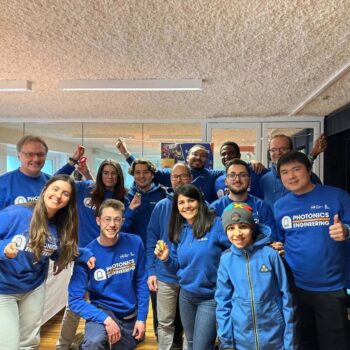
Over 1600 Youngsters Discovered Photonics at the Day of Science in Brussels!
A day full of experiments, discovery, and hands-on science that brought photonics to life for curious young minds.
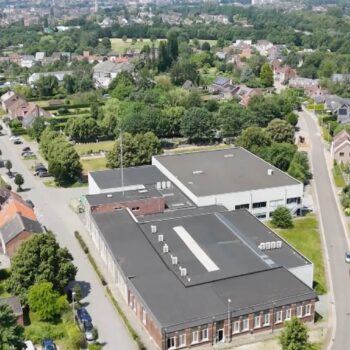
B-PHOT and City of Halle launch ambitious STEM support center
Vrije Universiteit Brussel, B-PHOT Brussels Photonics, and the City of Halle are collaborating on a new innovative STEM hub (Science, Technology, Engineering, Mathematics). Starting in 2025 in a 4500m² space near Brussels, the project will address the growing demand for STEM professionals and the need to engage young people early in scientific and technological studies. With over 6,000 secondary school students, Halle is set to become an even more significant education hub.
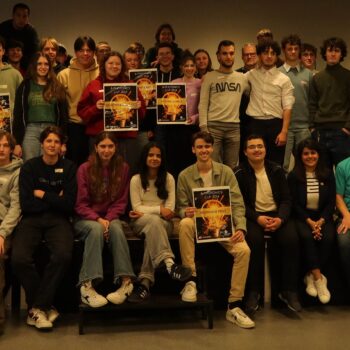
B-Photonics Cup 2024: Flemish youngsters create gadget of the future using light technology
The winners of the annual B-Photonics Cup have been announced! This science competition among various Belgian schools is an initiative of VUB, B-PHOT, and Colruyt Group Technics, challenging youth to develop their own gadget of the future based on light technology. The project 'Smart Mailbox' clinched the top prize.